

There was a time when the internet was simply about connecting people.
Then it became about sharing information.
Today, it's about sharing experiences.
Tomorrow, it will be about sharing value.
For years, communication and payments have existed in separate digital worlds. We chat on messaging platforms, connect on social networks, collaborate through online communities, and then leave those environments whenever money needs to change hands. Whether it's paying a freelancer, splitting a dinner bill, contributing to a group gift, or sending funds to a friend, the process usually involves switching between multiple applications.
It's a workflow we've become accustomed to, but it's far from ideal.
As digital interactions become increasingly integrated into our daily lives, a new trend is emerging at the intersection of communication and finance: SocialFi, or Social Finance.
SocialFi isn't simply another fintech buzzword. It's a fundamental shift in how people interact, transact, and build relationships online. By combining communication, identity, community, and financial services into a single experience, SocialFi is transforming money from a separate activity into a natural part of everyday conversations.
The question is no longer whether social finance will become mainstream. The question is how quickly it will reshape the way we socialize online.
The Disconnect Between Conversations and Payments
Think about how most payments begin.
Rarely do they start inside a banking application.
Instead, they start with a conversation.
A friend sends a message asking everyone to contribute toward dinner.
A client approves a project and asks for an invoice.
A family member requests financial support.
A community organizer collects funds for an event.
The communication happens first. The payment comes later.
Yet despite this natural connection, modern digital experiences force users to separate these actions. The conversation takes place in one application while the transaction happens in another.
This may seem like a small inconvenience, but when multiplied across millions of interactions every day, it creates significant friction.
Every additional step increases the chances of delays, forgotten payments, abandoned transactions, or poor user experiences.
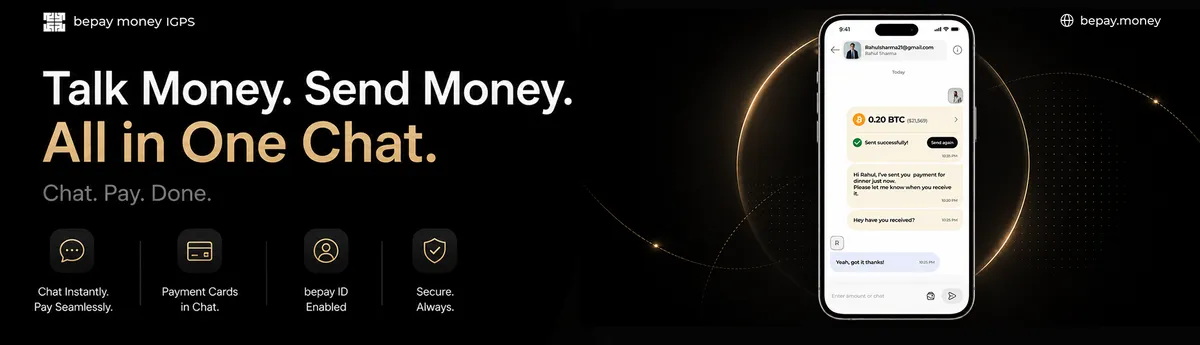
SocialFi addresses this challenge by bringing communication and payments together into a single environment.
Instead of interrupting the conversation to complete a transaction elsewhere, users can communicate and transfer value within the same interaction.
The result is a more seamless, intuitive, and efficient digital experience.
Why SocialFi Is Emerging Now
The rise of SocialFi isn't happening by accident.
Several technological and behavioral shifts are converging at the same time.
First, people are spending more time in digital communities than ever before. From creator economies and gaming ecosystems to professional networks and global interest groups, communities have become a central part of online life.
Second, digital payments have become increasingly normalized. Consumers now expect transactions to happen instantly, regardless of location or time zone.
Third, blockchain technology has introduced new ways to move value globally without relying entirely on traditional financial infrastructure.
Together, these developments have created the perfect conditions for social finance to emerge.
People no longer want communication platforms that only allow conversations.
They want platforms that allow action.
And increasingly, financial interactions are one of the most important actions users want to perform.
From Messaging Platforms to Financial Ecosystems
The evolution of the internet has always followed a simple pattern: reduce friction.
Email made communication faster.
Social media made content sharing easier.
Messaging applications made conversations instant.
SocialFi represents the next stage of that evolution.
Instead of treating payments as separate events, social finance platforms integrate them directly into user interactions.
Imagine discussing a project with a client and receiving payment in the same conversation thread.
Imagine coordinating a group trip and settling expenses instantly within the group chat.
Imagine supporting a content creator with a single tap without ever leaving the community you're part of.
These experiences may seem small individually, but collectively they represent a major shift in digital behavior.
The less friction there is between intention and action, the more natural online interactions become.
Why Chat and Pay Makes Perfect Sense
At its core, money is social.
People exchange value because of relationships, interactions, agreements, and shared experiences.
Whether it's paying for dinner, contributing to a community, rewarding a creator, or helping a friend, financial transactions are often driven by human connections.
Yet traditional financial tools were built around institutions rather than interactions.
SocialFi flips that model.
Instead of asking users to adapt to financial systems, it adapts financial systems to human behavior.
This is why the concept of chat and pay feels so intuitive.
When someone sends a message requesting payment, the next logical step should be the ability to complete that payment immediately.
Without switching applications.
Without copying payment details.
Without disrupting the flow of the conversation.
The payment becomes part of the interaction rather than a separate task.
And that seemingly simple change has enormous implications for user experience.
Building Stronger Digital Communities
One of the most exciting aspects of SocialFi is its potential to strengthen online communities.
Communities thrive when participation is easy.
Whether it's contributing resources, supporting members, rewarding participation, or funding initiatives, financial interactions play a crucial role in community growth.
Traditional systems often make these processes cumbersome.
Members must leave the platform, use external tools, and navigate multiple steps before completing a transaction.
SocialFi removes those barriers.
When payments become native to the community experience, participation becomes more fluid.
Creators can receive support directly from their audiences.
Communities can organize fundraising efforts more effectively.
Members can reward valuable contributions instantly.
Value flows as easily as information.
This creates stronger engagement and more sustainable digital ecosystems.
The Global Nature of Social Finance
The internet is inherently borderless.
A conversation can involve participants from Mumbai, Dubai, London, Singapore, and New York simultaneously.
Yet financial systems often remain constrained by national borders.
International payments continue to face challenges such as:
High transaction costs
Currency conversion fees
Settlement delays
Banking restrictions
These limitations create friction in an otherwise connected world.
SocialFi platforms powered by modern financial infrastructure are helping bridge this gap.
By enabling faster and more accessible value transfer, they allow financial interactions to keep pace with global communication.
As communities become increasingly international, this capability becomes even more important.
People don't think in terms of borders when they communicate online.
Their financial tools shouldn't either.
Security and Trust in Social Finance
Bringing communication and payments together creates tremendous opportunities, but it also raises important questions around security and trust.
Users need confidence that both their conversations and their financial assets remain protected.
This is why modern SocialFi platforms prioritize secure architecture.
Advanced encryption, verified transactions, secure wallet infrastructure, fraud monitoring systems, and strong authentication mechanisms help create safe environments for users.
Trust is especially important because financial interactions are deeply personal.
People need assurance that their money is secure and that their transactions are transparent and verifiable.
The future of social finance depends not only on convenience but also on confidence.
The most successful platforms will be those that deliver both.
The Future of Human-Centered Finance
For decades, financial innovation focused primarily on institutions.
Today, the focus is shifting toward individuals and communities.
People want financial experiences that feel as intuitive as the digital platforms they use every day.
They want transactions to happen naturally within the context of their interactions.
They want communication and commerce to coexist seamlessly.
SocialFi represents an important step toward that future.
Rather than treating money as a separate activity, it integrates value exchange into the places where relationships already exist.
In doing so, it makes finance more accessible, more collaborative, and more human.
Final Thoughts
The next evolution of the internet won't simply be about better communication.
It will be about better interaction.
Communication, community, identity, and finance are increasingly converging into unified digital experiences.
SocialFi sits at the center of this transformation.
By enabling users to chat and pay within the same environment, it removes friction from everyday interactions and creates new opportunities for collaboration, participation, and economic activity.
Because ultimately, money has always been social.
Technology is finally evolving to reflect that reality.
And as SocialFi continues to grow, the future of digital interaction may look remarkably simple:
Talk. Connect. Transact.
All within the same conversation.
Download App: bepay money on Google Play Store
Connect with us: Website | LinkedIn | Twitter | Instagram